A Review on Azo Dyes Removal from Wastewater Using Biochar-Based Adsorbents: Materials, Mechanisms, and Perspectives
DOI:
https://doi.org/10.26554/ijmr.20253258Keywords:
Azo Dyes, Biochar Adsorbent, Water TreatmentAbstract
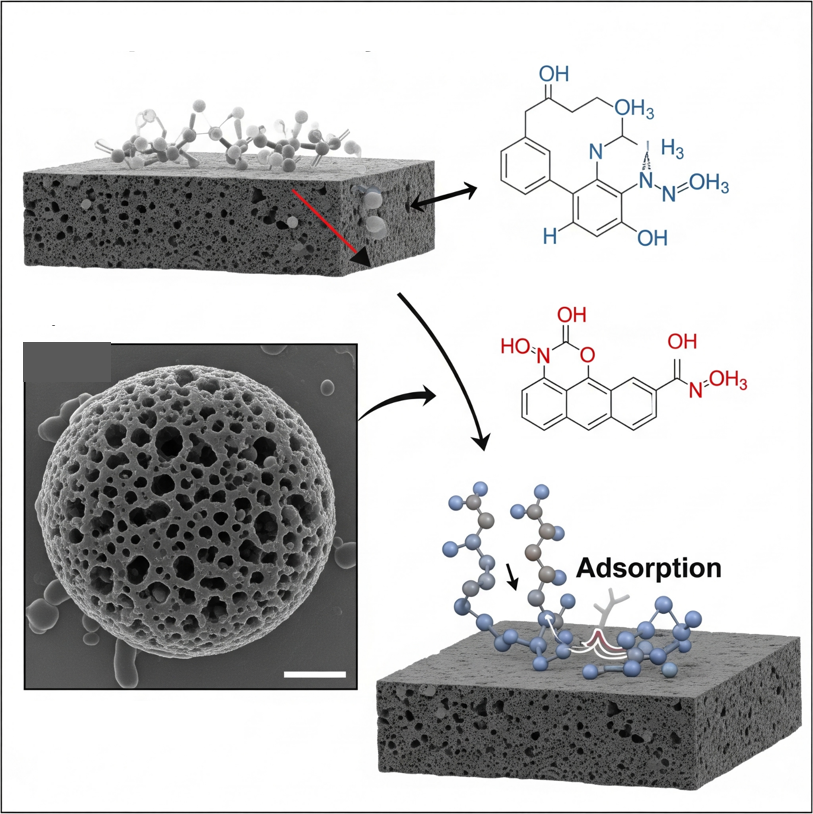
Azo dyes are synthetic organic pollutants widely used in the textile, food, leather, and cosmetic industries. Effluents containing these dyes are often discharged into the aquatic environment without adequate treatment, causing serious pollution that is toxic, carcinogenic, and resistant to biological degradation. Among various effluent treatment methods, adsorption stands out as an efficient, simple, and economical technique. Biochar a porous solid resulting from biomass pyrolysis has been of great interest as a potential adsorbent due to its superior physical-chemical properties and abundant raw material availability. This article reviews recent developments in the utilization of biochar, both natural and modified, for adsorption of azo dyes from wastewater. It discusses the mechanism of interaction between biochar and dye, operational factors that affect efficiency, and various biochar modification strategies such as chemical activation, metal addition, composite formation, and the use of nano-biochar. Data from various literatures show that the adsorption capacity of biochar towards Rhodamine B and Congo Red can reach more than 1000 mg/g, especially after advanced modifications. Nonetheless, technical and economic challenges in the widespread application of biochar still need to be overcome. This article provides an in-depth insight into the potential and future direction of biochar development as a sustainable solution in the treatment of wastewater polluted with azo dyes.
References
Adawiyah, R., N. Yuliasari, Y. Hanifah, and N. R. Palapa (2025). Areca catechu Biochar and Nano-Biochar as Adsorbents for Congo Red: Synthesis, Characterization, and Performance Evaluation. Biochar, 20(1); 112–128.
Ahmad, N., Rohmatullaili, A. Wijaya, and A. Lesbani (2024). Magnetite Humic Acid-Decorated MgAl Layered Double Hydroxide and Its Application in Procion Red Adsorption. Colloids and Surfaces A: Physicochemical and Engineering Aspects, 684; 133042.
Al-asadi, S. T., Z. Haider, F. F. Al-qaim, and H. Kamyab (2025). A Comprehensive Review of Methylene Blue Dye Adsorption on Activated Carbon from Edible Fruit Seeds: A Case Study on Kinetics and Adsorption Models. Carbon Trends, 20; 100507.
Alkhair, S., N. Zouari, M. Ibrahim, A. Ibrahim, and M. A. Al (2024). Efficacy of Adsorption Processes Employing Green Nanoparticles for Bisphenol A Decontamination in Water: A Review. Environmental Nanotechnology, Monitoring & Management, 22; 100963.
Almaz, Z. and F. N. Agircelik (2023). Enzymatic Degradation of Azo Dyes Methylene Blue and Congo Red with Peroxidase Purified from Cauliflower Using Affinity Chromatography Technique: Kinetic Study, Optimization and Metal Binding Activity. Journal of Bioscience and Bioengineering, 136(2); 102–108.
Ao, C., M. Shan, Y. Zhang, X. Li, Y. Kong, X. Dong, Y. Liu, and D. Wu (2025). Impact of External Conditions on the Desorption and Degradation Capacity of Biochar for Rhodamine B. Molecules, 30(8); 1717.
Bai, G., G. Liu, T. Ran, and Y. Shi (2025). The Construction of Flocculation-to-Extraction Coupled System with a Novel Dual-Functional Polymer for Dye Wastewater Treatment and Reuse. Environmental Research, 278; 121725.
Cano, F. J., R. Sánchez-Albores, A. Ashok, J. Escorcia-García, A. Cruz-Salomón, O. Reyes-Vallejo, P. J. Sebastian, and S. Velumani (2025). Carica papaya Seed-Derived Functionalized Biochar: An Environmentally Friendly and Efficient Alternative for Dye Adsorption. Journal of Materials Science: Materials in Electronics, 36(11); 1–25.
Chanda, R., A. Karmokar, M. N. Hassan, T. Jahid, S. Muhammad, N. Aich, and B. K. Biswas (2025). Enhanced Performance of Visible-Light-Induced Bi2MoO6–N-Doped Biochar for Rhodamine B Degradation and Textile Wastewater Decontamination. Case Studies in Chemical and Environmental Engineering, 11; 101090.
Cui, C., W. Qiao, D. Li, and L. J. Wang (2025). Dual Cross-Linked Magnetic Gelatin/Carboxymethyl Cellulose Cryogels for Enhanced Congo Red Adsorption: Experimental Studies and Machine Learning Modelling. Journal of Colloid and Interface Science, 678; 619–635.
Deivayanai, V. C., S. Karishma, P. Thamarai, A. Saravanan, P. R. Yaashikaa, and A. S. Vickram (2025). Advanced Modeling of Congo Red Dye Adsorption Using Magnetic Nanoparticles Functionalized with Jackfruit Seed Waste Biomass: A Contemporary Modeling Approach. Materials Chemistry and Physics, 341; 130947.
Deso, L., M. Jayakumar, A. Selvakumar, and M. Rangaraju (2025). Comprehensive Review on Co-Integration of Conventional Systems and Advanced Oxidation Processes for Industrial and Agricultural Wastewater Treatment Applications. 20; 100638.
Fan, W. and X. Zhang (2025). Polydopamine Modified Coconut Shell Biochar Decorated with ZIF-8 for Improved Adsorption of Malachite Green and Rhodamine B from Aqueous Solution. Environmental Research, 269; 120933.
Fattahi, N., T. Fattahi, M. Kashif, A. Ramazani, and W. Jung (2024). Lignin: A Valuable and Promising Bio-Based Absorbent for Dye Removal Applications. International Journal of Biological Macromolecules, 276(P1); 133763.
Fitri, E. S. and R. Ardiansyah (2023). Study and Characterization of Hydrochar from Duku (Lansium domesticum) Peel. Indonesian Journal of Material Research, 1(2); 44–50.
Fitri, E. S., R. Mohadi, N. R. Palapa, S. A. Rachman, and A. Lesbani (2024). Selective Removal of Anionic and Cationic Dyes Using Magnetic Composites. Science and Technology Indonesia, 9(1); 129–136.
Fu, M., J. Xu, T. Lu, Q. Ma, Y. Luo, W. Feng, and X. Wang (2025). Synthesis and Characterization of N-Doped Seaweed Biochar and Removal of Cationic Dyes. ACS Omega, 10(18); 18753–18763.
Goswami, D., J. Mukherjee, C. Mondal, and B. Bhunia (2024). Bioremediation of Azo Dye: A Review on Strategies, Toxicity Assessment, Mechanisms, Bottlenecks and Prospects. Science of the Total Environment, 954; 176426.
Hong, C., C. Huang, L. Han, F. Wang, G. Chen, Y. Song, and Z. Li (2025). Batch Preparation of Low-Cost Photothermal Amidoxime-Based Fabric Adsorbent for Boosting Uranium Extraction from Seawater. Separation and Purification Technology, 362(P1); 131706.
Ige, A. O., B. O. Ogunsile, O. T. Ore, and D. B. Olawade (2024). Adsorption of Congo Red From Aqueous Solution Using Rice Husk, Calcined Kaolin Clay, and Microwaved Rice Husk Clay Hybrid. Discover Chemistry, 1(1); 9.
Jadhav, G. S., A. K. Mehta, M. M. Ghangrekar, and G. D. Bhowmick (2025). Metal-Doped (Fe-Mn) Heteroatom-Rich Porous Biochar-Based Poison-Resilient Cathode Catalyst for Enhanced Performance of Microbial Fuel Cell. Sustainable Energy Technologies and Assessments, 75; 104208.
Jankowska, K., Z. Su, J. Zdarta, T. Jesionowski, and M. Pinelo (2022). Synergistic Action of Laccase Treatment and Membrane Filtration During Removal of Azo Dyes in an Enzymatic Membrane Reactor Upgraded with Electrospun Fibers. Journal of Hazardous Materials, 435; 129071.
Jeon, C. and M. J. Shim (2025). Removal of Rhodamine B From Aqueous Solutions Using Coffee Residual. Desalination and Water Treatment, 322; 101188.
Jia, Q., P. K. Nguyen, Z. Gu, X. Zhang, M. Liu, X. Tian, L. Ma, L. Gong, X. Mu, and Y. Chang (2021). N-Doped Bismuth Molybdate Decorated with Pt Nanoparticles Removal Azo Dyes Efficiently Via the Synergistic Effect of Adsorption and Photocatalysis. Journal of Alloys and Compounds, 863; 158336.
Jin, H., J. Wan, J. Ho, J. Kwak, C. Son, B. Jun, and K. Chon (2025). Hydroxyapatite and Magnetic Hydroxyapatite Biochar From Pine Nut Husks for Anionic Azo Dye Adsorption: Performance and Reusability Assessment. Applied Surface Science, 707; 163607.
Juleanti, N., N. R. Palapa, T. Taher, N. Hidayati, B. I. Putri, and A. Lesbani (2021). The Capability of Biochar-Based CaAl and MgAl Composite Materials as Adsorbent for Removal Cr(VI) in Aqueous Solution. Science and Technology Indonesia, 6(3); 196–203.
Kalderis, D., P. Gholami, I. Pashalidis, and A. Khataee (2024). Synergistic Integration of Biochar and Graphene Oxide in Multi-Functional Composites: From Sustainable Synthesis to Environmental Remediation and Energy Storage. Journal of Industrial and Engineering Chemistry, 144; 210–227.
Kayranli, B. (2025). Adsorption Efficiency of Groundnut Husk Biochar in Reduction of Rhodamine B, Recycle, and Reutilization. Biomass Conversion and Biorefinery; 1–13.
Kohzadi, S., N. Marzban, J. A. Libra, M. Bundschuh, and A. Maleki (2023). Removal of RhB From Water by Fe-Modified Hydrochar and Biochar – An Experimental Evaluation Supported by Genetic Programming. Journal of Molecular Liquids, 369; 120971.
Kumaravel, R. and V. K. Shanmugam (2024). Biomimetic and Ecological Perspective Towards Decolorization of Industrial Important Azo Dyes Using Bacterial Cultures – A Review. Sustainable Chemistry for the Environment, 7; 100130.
Laxmi Deepak Bhatlu, M., P. S. Athira, N. Jayan, D. Barik, and M. S. Dennison (2023). Preparation of Breadfruit Leaf Biochar for the Application of Congo Red Dye Removal From Aqueous Solution and Optimization of Factors by RSM-BBD. Adsorption Science and Technology, 1; 7369027.
Li, S., W. Li, Y. Liao, X. Chen, Z. Ma, and B. Ju (2025). The Adsorption Mechanism of (Ni and NiO) Doped PtSe₂ Monolayer to Polar Gas Molecules (CO, NH₃ and SO₂): A First – Principle Study. Materials Science in Semiconductor Processing, 192; 109448.
Li, Y., B. He, H. Zhang, J. Liu, S. Li, H. Wang, H. Peng, Y. Wang, J. Dai, Y. Wang, L. Peng, and H. Kang (2024). Enriched Extensin and Cellulose for Non-Collapse Biochar Assembly to Maximize Carbon Porosity and Dye Adsorption with High Bioethanol Production. Industrial Crops and Products, 222(P4); 119924.
Liu, Q. H., Y. H. Qiu, and Z. M. Yang (2025). KOH Activation Increased Biochar’s Capacity to Regulate Electron Transfer and Promote Methanogenesis. Energy, 322; 135650.
Mayilswamy, N., B. Kandasubramanian, and A. Gore (2025). ANN-Based Predictive Modelling for Optimizing Rhodamine B Removal From Aqueous Matrices Using Ball-Milled Sewage Sludge Biochar. Materials Today Communications, 46; 112798.
Minh, H. C., N. Resources, L. T. Ward, T. D. District, L. T. Ward, and T. Duc (2025). Adsorption Characteristics of Coconut Husk Biochar for Organics in Water. Indo. J. Chem. Res., 25(3); 730–743.
Myung, E., H. Kim, N. Choi, and K. Cho (2024). The Biochar Derived From Spirulina platensis for the Adsorption of Pb and Zn and Enhancing the Soil Physicochemical Properties. Chemosphere, 364; 143203.
Nguyen, M. L., T. T. Nguyen, and H. L. Ngo (2025). Efficient Rhodamine B Degradation Via Fenton-Like and E-Fenton Processes Using Magnetic Biochar From Rubber Seed Shells. RSC Advances, 15(15); 11327–11336.
Normah, N. R. Palapa, T. Taher, R. Mohadi, H. P. Utami, and A. Lesbani (2021). The Ability of Composite Ni/Al-Carbon Based Material Toward Readsorption of Iron(II) in Aqueous Solution. Science and Technology Indonesia, 6(3); 156–165.
Oyebamiji, O. O., A. S. Olaleru, R. B. Oyeleke, and L. N. Ofodile (2025). Evaluation and Characterization of Biochar and Briquettes From Agricultural Wastes for Sustainable Energy Production. Waste Management Bulletin, 3(3); 100198.
Oyetade, J. A., R. L. Machunda, and A. Hilonga (2022). Photocatalytic Degradation of Azo Dyes in Textile Wastewater by Polyaniline Composite Catalyst – A Review. Scientific African, 17; e01305.
Palapa, N. R., M. B. K. Putra, E. Musifa, N. Yuliasari, and R. Adawiyah (2024a). Preparation and Application of Biochar From Areca catechu L. Peel for Adsorption. Indonesian Journal of Environmental Management and Sustainability, 9(1); 28–35.
Palapa, N. R., Z. A. Zahara, R. Mohadi, I. Royani, and A. Lesbani (2024b). High Performance of Ni-Al/Magnetite Biochar for Methyl Orange Removal in Aqueous Solution. Science and Technology Indonesia, 9(1); 156–166.
Parameshwarappa, S., K. T. Chinnagiri, and R. T. Chinnagiri (2025). Synthesis and Characterization of Sulfadiazine Azo Dyes: Electrochemical and Photophysical Properties. Results in Surfaces and Interfaces, 19; 100475.
Patil, P. S. and N. Sekar (2025). Photostable Thiophene-Based Heterocyclic Azo Dyes: Synthesis, Characterization, Photophysical Analysis, Dyeing Study, Fastness, UPF, Thermal Stability, and Antibacterial Activity. Journal of Molecular Liquids, 423; 126997.
Paul, S. and R. Selvasembian (2025). Potential of Pyrolyzed and Co-Pyrolyzed Biomass-Derived Biochar for the Removal of Ciprofloxacin. Journal of Analytical and Applied Pyrolysis, 186; 106884.
Putri, B. I., F. S. Arsyad, and A. Lesbani (2022). Hydrothermal Carbonization of Eucheuma cottonii for Selective Adsorption of Dyes. Indonesian Journal of Environmental Management and Sustainability, 8(4); 154–165.
Radovanović, M. P., N. Zdolšek, S. Brković, M. J. Dučić, D. V. Anićijević, I. J. Častvan, V. Pavićević, and B. Janković (2025). Production and Characterization of Biochar and Modified Biochars by Carbonization Process of Bearberry (Arctostaphylos uva-ursi. L.): Adsorption Capacities and Kinetic Studies of Pb²⁺, Cd²⁺ and Rhodamine B Removal From Aqueous Solutions. Diamond and Related Materials, 151.
Rafatullah, M., O. Sulaiman, R. Hashim, and A. Ahmad (2010). Adsorption of Methylene Blue on Low-Cost Adsorbents: A Review. Journal of Hazardous Materials, 177(1–3); 70–80.
Rahimieh, A., G. Akhavan, M. Mousazadehgavan, M. Mehriar, and A. Javadi (2024). Propionate Production and Degradation in the Biological Wastewater Treatment: A Mini Review on the Role of Additives in Anaerobic Digestion. Desalination and Water Treatment, 319; 100555.
Raj, R., I. S. Gundepuri, and M. M. Ghangrekar (2025). High Specific Surface Area Graphene-Like Biochar for Green Microbial Electrosynthesis of Hydrogen Peroxide and Bisphenol A Oxidation at Neutral pH. Environmental Research, 275; 121374.
Rubangakene, N. O., A. Elwardany, M. Fujii, H. Sekiguchi, M. Elkady, and H. Shokry (2023). Biosorption of Congo Red Dye From Aqueous Solutions Using Pristine Biochar and ZnO Biochar From Green Pea Peels. Chemical Engineering Research and Design, 189; 636–651.
Shahzad, K., A. Hasan, S. K. Hussain Naqvi, S. Parveen, A. Hussain, K. C. Ko, and S. H. Park (2025). Recent Advances and Factors Affecting the Adsorption of Nano/Microplastics by Magnetic Biochar. Chemosphere, 370; 143936.
Siregar, P. M. S. B. N., N. R. Palapa, A. Wijaya, E. S. Fitri, and A. Lesbani (2021). Structural Stability of Ni/Al Layered Double Hydroxide Supported on Graphite and Biochar Toward Adsorption of Congo Red. Science and Technology Indonesia, 6(2); 85–95.
Suryawan, I. W. K., Q. Helmy, S. Notodarmojo, R. Pratiwi, and I. Y. Septiariva (2021). Textile Dye Reactive Black 5 (RB5) Bio-Sorption with Moving Bed Biofilm Reactor and Activated Sludge. Indonesian Journal of Environmental Management and Sustainability, 5(2); 67–71.
Tabish, M., A. B. Tabinda, Z. Mazhar, A. Yasar, and J. Ansar (2024). Physical, Chemical and Biological Treatment of Textile Wastewater for Removal of Dyes and Heavy Metals. Desalination and Water Treatment, 320; 100842.
Tran, T. K. C., T. T. T. Truong, A. L. Le, D. A. M. Do, T. G. Nguyen, T. D. Tran, and T. D. Pham (2025). Synthesis, Characterization of Novel Protein-Modified Rice Husk Biochar and Their Applications for Highly Adsorptive Removal Azo Dye in Water. Environmental Technology and Innovation, 37; 104037.
Volavka, D., M. Lisnichuk, J. Bednar, and E. Adriana (2024). Tuning the Photocatalytic Performance of Mesoporous Silica-Titanium Dioxide and Cobalt Titanate for Methylene Blue and Congo Red Adsorption / Photodegradation: Impact of Azo Dyes Concentration. Journal of Photochemistry & Photobiology, A: Chemistry, 451; 115522.
Wen, Q., X. An, B. Huang, J. Zhang, and C. He (2025). Catalytic Ozonation for Hospital Wastewater Treatment: Challenge of Simultaneous Removal of Pharmaceutical Contaminants and Pathogenic Microorganisms. Chemical Engineering Journal, 515; 163644.
Wibiyan, S., I. Royani, and A. Lesbani (2024). Synthesis and Performance of ZnAl @ Layered Double Hydroxide Composites with Eucheuma cottonii for Adsorption and Regeneration of Congo Red Dye. Indonesian Journal of Environmental Management and Sustainability, 8(3); 126–134.
Wijaya, A., P. M. S. B. N. Siregar, A. Priambodo, N. R. Palapa, T. Taher, and A. Lesbani (2021). Innovative Modified of CuAl/C (C = Biochar, Graphite) Composites for Removal of Procion Red From Aqueous Solution. Science and Technology Indonesia, 6(4); 228–234.
Wijaya, A. and N. Yuliasari (2023). Biochar Derived From Rice Husk as Effective Adsorbent for the Removal Congo Red and Procion Red MX-5B Dyes. Indonesian Journal of Material Research, 1(1); 1–7.
Wu, M., K. Xie, C. Wu, and C. Shu (2025). Polyethylenimine-Modified Bioflocculant for Highly Effective Removal of Anionic Textile Dyes From Aqueous Solution. Journal of the Taiwan Institute of Chemical Engineers; 106106.
Xiang, K., H. Chen, C. Yao, Y. Wan, H. Ren, and J. Zhou (2025). Data-Driven Machine Learning With SHAP for Predicting Multiple Biochar Properties From Agricultural and Forestry Waste. Biomass and Bioenergy, 200; 107958.
Xiao, F. (2022). A Review of Biochar Functionalized by Thermal Air Oxidation. Environmental Functional Materials, 1(2); 187–195.
Xu, W., B. Cai, X. Zhang, Y. Zhang, Y. Zhang, and H. Peng (2024). The Biochar Derived From Pecan Shells for the Removal of Congo Red: The Effects of Temperature and Heating Rate. Molecules, 29(23); 5532.
Yang, K., B. Zhao, Q. Guo, X. Zhang, and J. Pan (2025a). Impact Factors and Mechanisms of Iron-Modified Corn Stover Biochars Activating Urea-Hydrogen Peroxide to Remove Rhodamine B in Water. Desalination and Water Treatment, 322; 101201.
Yang, W., H. Dong, Y. Tian, Y. Tong, J. Lu, L. Liao, and J. Niu (2025b). Electrochemistry Enhanced Multi-Stage Biological Contact Oxidation Treating Sulfamethoxazole Wastewater: Performance, Degradation Pathway and Microbial Community. Separation and Purification Technology, 357; 130044.
Yek, P. N. Y., W. Peng, C. C. Wong, R. K. Liew, Y. L. Ho, W. A. Wan Mahari, E. Azwar, T. Q. Yuan, M. Tabatabaei, M. Aghbashlo, C. Sonne, and S. S. Lam (2020). Engineered Biochar Via Microwave CO₂ and Steam Pyrolysis to Treat Carcinogenic Congo Red Dye. Journal of Hazardous Materials, 395; 122636.
Yu, C., T. Pan, X. Zhu, Q. Peng, Y. Yi, and J. Zhou (2023). Highly Effective and Energy-Saving Adsorption-Microwave Catalytic Decomposition of NO With Novel High-Adsorption-Capacity Adsorbent in a Two-Stage Fixed-Bed Reactor. Separation and Purification Technology, 322; 124281.
Zhang, D., B. Wu, T. Wang, M. Yılmaz, G. Sharma, and A. Kumar (2025a). Multi-Mechanism Synergistic Adsorption of Lead and Cadmium in Water by Structure-Functionally Adapted Modified Biochar: A Review. Desalination and Water Treatment, 322; 101156.
Zhang, X., X. Yang, F. Xie, X. Chen, Y. Zhang, and Q. Zhang (2025b). Magnetic Biochar Prepared With Rosa roxburghii Residue as Adsorbents for Congo Red Removal. Materials, 18(6); 1306.